The binthat knows.

SortSight is a smart bin that recognises waste on the device itself. No cloud, and no photo ever leaves it. Made for Junction Hackathon 2026, on the Arduino UNO Q.

Built by Artem, Aren, Mikhail and Franciszek, Team Galilean Moons.

Drag to turn it

One technology, three steps.

The same loop fits a bin today and a drone or a handheld scanner next. Only the sensors and the model change.

Sense.

A camera and sensors read the item, or later the terrain.

Classify.

A local AI model decides what it is, on the device. No internet needed.

Act.

The bin routes the item and logs it. Next, the same loop can send the right crew.

181 kg

Every person in the EU generates 181 kg of packaging waste a year, and only 15.3 of 35.9 kg of plastic packaging is recycled (Eurostat, 2024). Waste is hard to fix when nobody knows what is in it. SortSight starts with knowing.

What the bin sees.

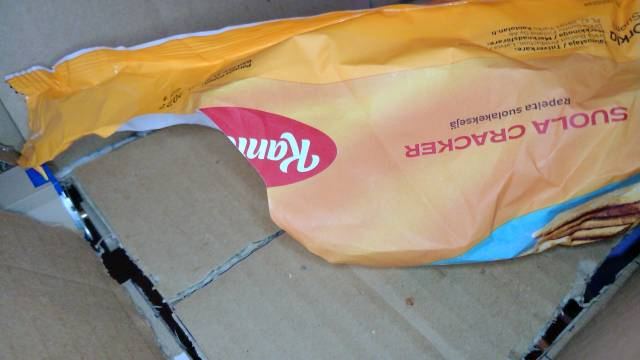
Example frames from the bin's own camera, changing on their own. We trained the edge AI on 10,000 images of products and packaging. Pick a type yourself to stop and look.

Camera frame: a plastic cracker wrapper on the trapdoorPlastic

Plastic bin

10,000 training images of products and packaging. These frames are examples.

Clear glass and transparent plastic confuse the model. Anything it is unsure about goes to Other, never a guess.

Built in one weekend.

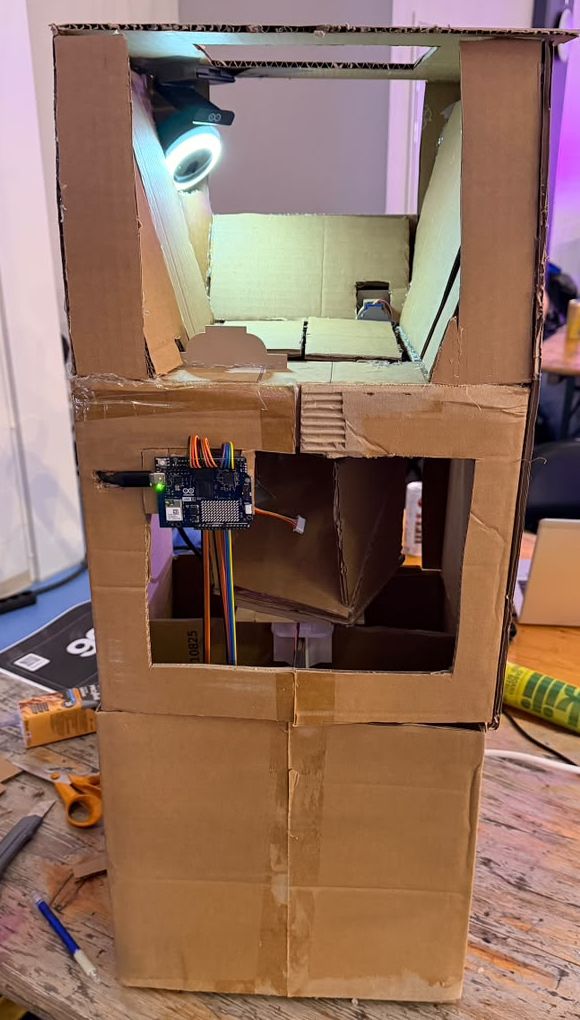
A cardboard prototype with real electronics: a camera and a ring light, an Arduino UNO Q, a chute turned by stepper motors, and a trapdoor that holds each item still.

The finished three-box cardboard bin on a workshop table, the Arduino board visible in the middle window
The bin: scan chamber on top, electronics in the middle, bins below.
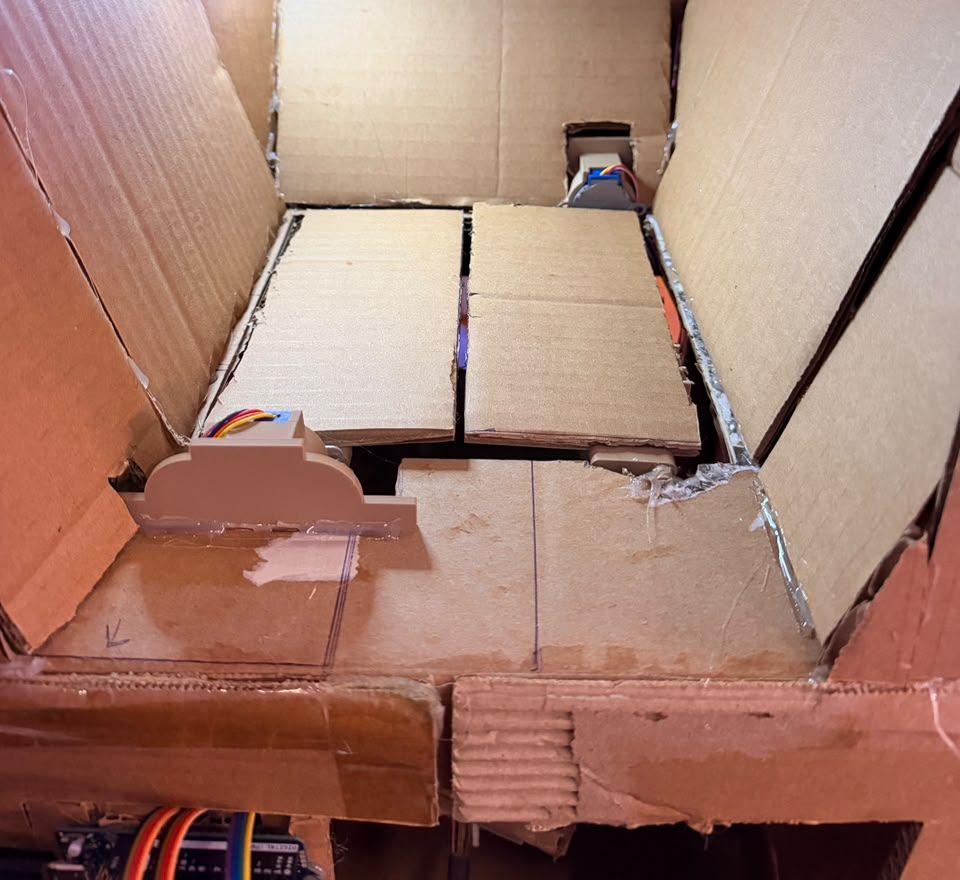
Inside the scan chamber: angled cardboard walls, a stepper motor and the sorting flaps
Inside the scan chamber: angled walls, the flaps and a stepper motor.
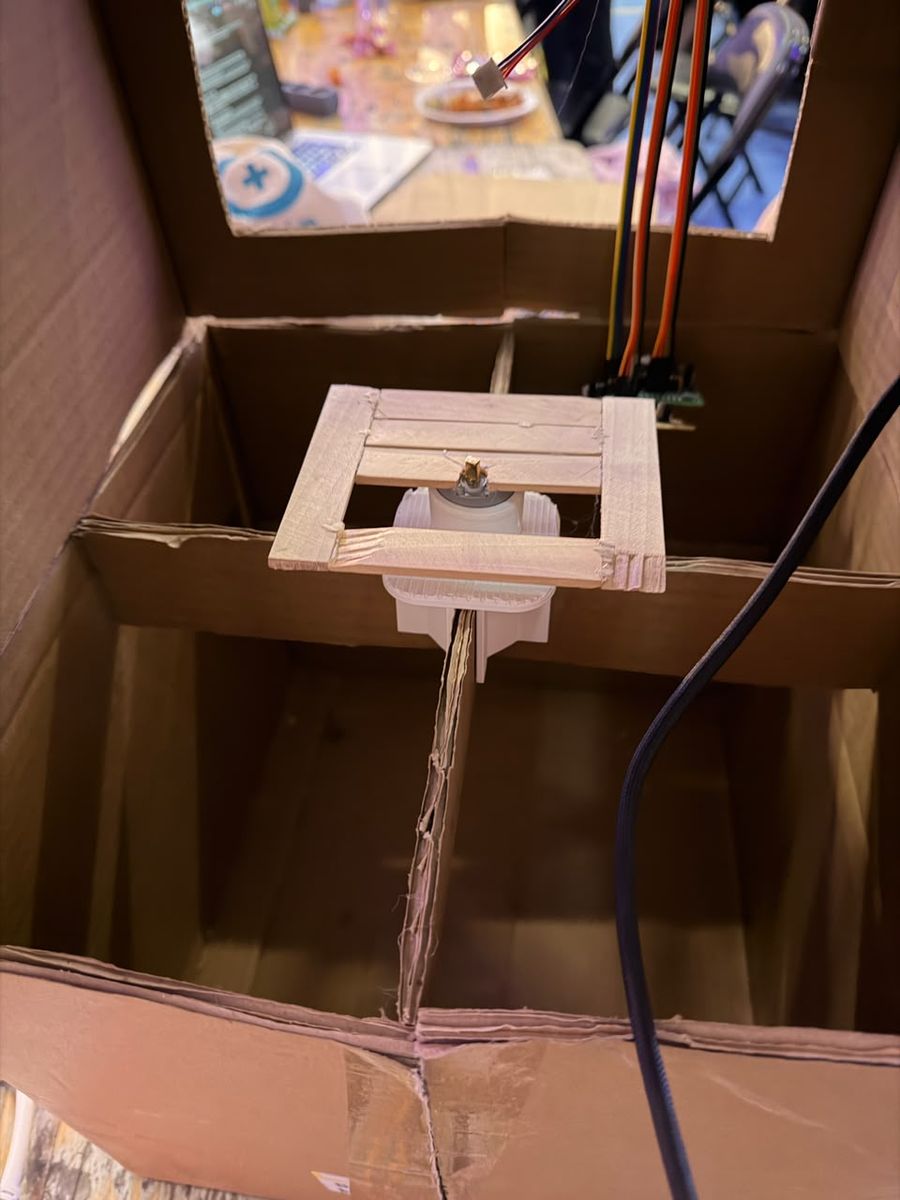
The trapdoor frame made of lolly sticks over a 3D-printed motor mount
The trapdoor: a lolly-stick frame on a 3D-printed mount.
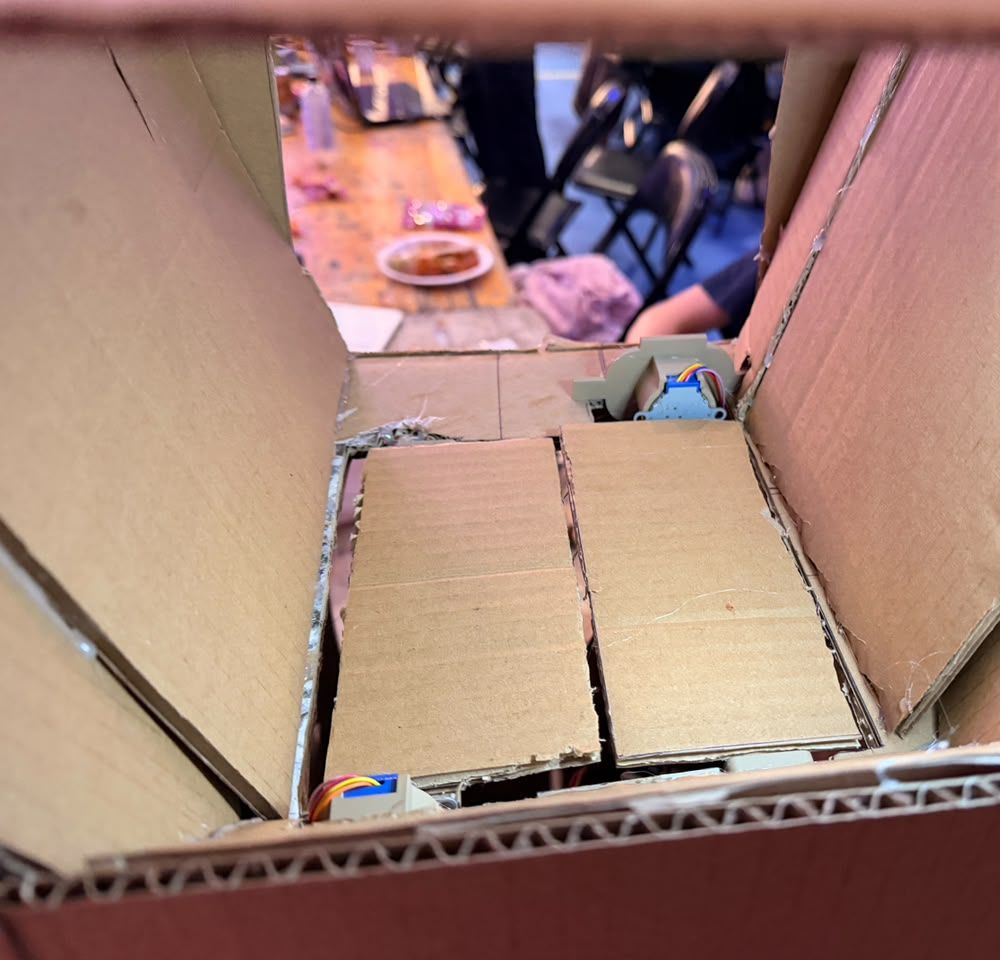
Looking down the chute at the camera and the sorting flaps
The view the camera has, looking down onto the trapdoor.

Camera

Looks at the item held on the trapdoor, lit by a ring light.

Linux side

The Dragonwing QRB2210 runs the local model: paper and cardboard, plastic, metal, other.

Microcontroller

The STM32U585 turns the chute, then opens the trapdoor, in a safe order.

Log

Category, time and bin location for every item. Never an image.

One item, five steps.

Scroll to follow an item through the bin. The order is a safety rule: the chute only moves behind a closed trapdoor.

  1. Drop

    Someone drops an item into the scan chamber.

  2. Rest

    A sensor waits until it is still, so a waving hand never triggers it.

  3. Look

    The camera takes one frame on the closed trapdoor, lit by the ring light.

  4. Decide

    The local model classifies it on the device. Unsure means Other.

  5. Sort and log

    The chute turns, the trapdoor opens, the event is logged. Never an image.

What we have worked on.

Everything below runs today. Drones, satellites and handheld scanners are the roadmap, not built or tested yet.

The dashboard

A household's waste, sorting and CO₂ estimate, updated as items are dropped in.

Open the dashboard

The presentation

Our Junction pitch: the problem, the technology and the bin, with PDF and PowerPoint downloads.

Open the presentation

The model

Edge AI trained on 10,000 images of products and packaging. It runs on the device, and below a confidence threshold the answer is Other.

The phone remote

Control the bin and see its camera from a phone on the same network.

Open the remote

The analytics

Items are logged by place, category and time. Gemma, a local model, reads that log when it is reachable.

The mechanism

Camera, ring light, chute, stepper motors and a trapdoor, driven by the STM32 in a tested order.